Top 5 Brooklyn Neighborhoods Buyers Are Targeting Right Now Spring 2026 Author: Laurie Savino, Licensed Associate Real Estate Broker | The Corcoran Group

Introduction
Spring 2026 is shaping up to be one of the better buyer windows Brooklyn has seen in years. Rising inventory and falling asking prices in several key neighborhoods are giving buyers more leverage than they've had since before the pandemic frenzy. Whether you're actively searching right now or you're an NYC renter finally weighing the leap to ownership, five neighborhoods in particular stand out.
These aren't just the trendiest ZIP codes. They're the neighborhoods where the market data is working in buyers' favor — where inventory is up, prices have softened, and well-prepared buyers are landing real value before competition returns.
Here's where buyers are looking, and why.

1. Bushwick — The Bold Play Under $1M
Inventory change: +30.3% year-over-year
Blended median asking price: ~$999,000 (down 16.3% YoY)
| Property Type | Approximate Price Range |
|---|---|
| Condo | $600K – $999K (median ~$800K) |
| Multi-Family (2–3 fam) | $900K – $1.3M |
| Co-op | Limited inventory; sparse data |
Bushwick tops StreetEasy's 2026 list of best neighborhoods for buyers — and the numbers explain why. Inventory has surged 30% year-over-year, and the blended asking price has dropped more than 16%, landing just under $1 million. That combination of more listings and motivated sellers creates exactly the kind of negotiating environment that rarely appears in Brooklyn.
Bushwick's housing stock skews heavily toward condos (many in converted lofts and industrial buildings), new construction, and multi-family properties. There's limited traditional co-op inventory, which means the blended median here isn't being distorted downward the way it is in neighborhoods with large co-op stock. If you're seeing prices near $999K in Bushwick, you're largely looking at condos and smaller multi-family buildings — not co-ops pulling the number down.
The neighborhood's identity has evolved significantly. Bushwick today is a hub for working artists, independent restaurants, creative studios, and small-batch manufacturing — all within minutes of the J, M, Z, and L subway lines. For buyers priced out of Williamsburg or Bed-Stuy even two years ago, Bushwick now offers a genuine entry point into Brooklyn ownership with real upside built in.
Who it's right for: First-time buyers, young professionals, investors, and buyers who want genuine Brooklyn character at an accessible price point. If you're relocating from another city and want energy and edge — this is it.
The agent's take: Sellers in Bushwick who overpriced in 2025 are now cutting 5–8% after 45+ days on market. That means buyers who come in pre-approved and prepared with comparable data have real power right now. That window won't last once spring competition picks up.
2. Bay Ridge — Brooklyn's Best-Kept Secret for Families
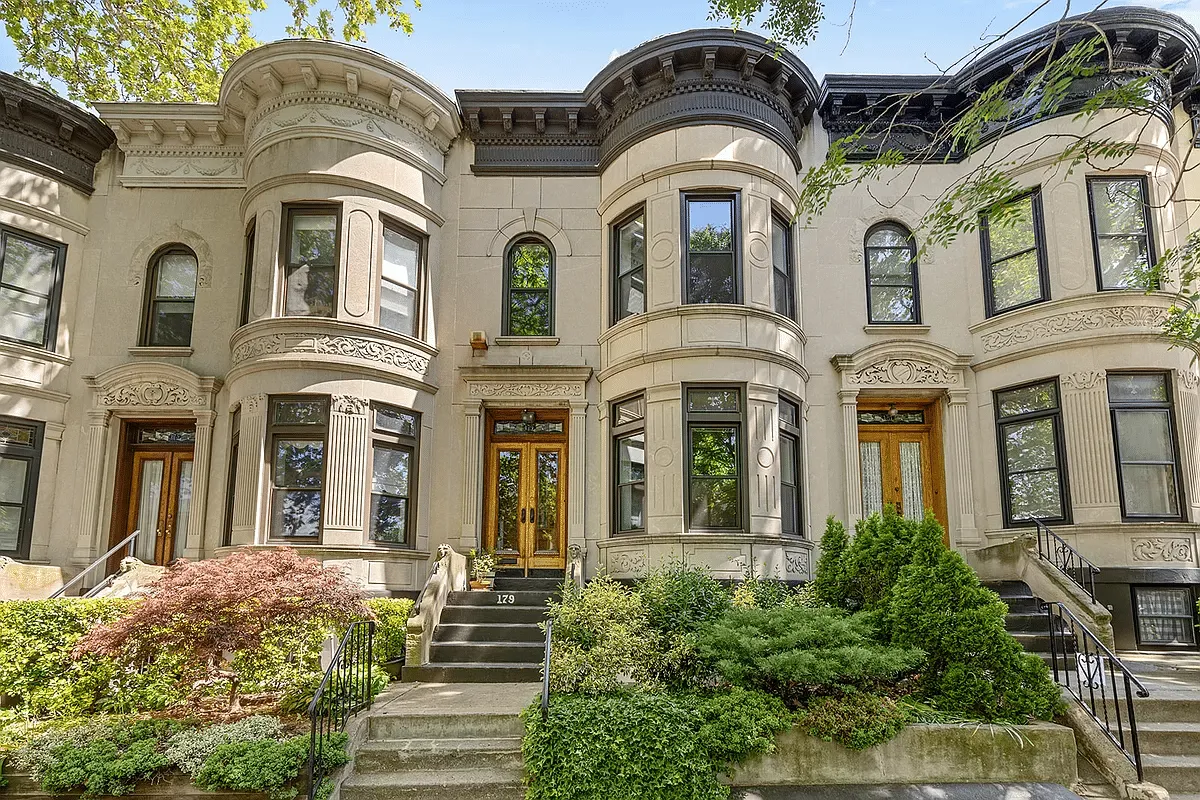
Inventory change: +6.7% year-over-year
Blended median asking price: ~$699,000 (down 4.2% YoY) — heavily influenced by co-op volume
| Property Type | Approximate Price Range |
|---|---|
| Co-op | $300K – $400K (median ~$327K) |
| Condo | $500K – $800K |
| Single-Family / Multi-Family | $700K – $1.3M+ |
This is exactly why the blended number needs to be unpacked. Bay Ridge's $699,000 StreetEasy median is being pulled down significantly by the neighborhood's large co-op inventory — which trades in the $300K–$400K range and represents a substantial share of transactions. If you're a buyer looking at single-family or multi-family homes in Bay Ridge, you're looking at a very different market: a range of $700K to $1.3M+ depending on size, location, and condition.
That said, across every property type, Bay Ridge offers exceptional value compared to comparable Brooklyn neighborhoods. Co-ops in the $300K–$400K range give first-time buyers a genuine path to ownership in a neighborhood with strong bones. Condos in the $500K–$800K range deliver modern amenities at a fraction of what you'd pay in Park Slope or Cobble Hill. And the multi-family market — which generates rental income to offset carrying costs — remains one of the most compelling in the entire borough.
What makes Bay Ridge unique isn't just the pricing. It's 40+ blocks of Shore Road Park along the harbor, Verrazano Bridge views, a residential scale that actually feels livable, strong public and parochial schools, and a commercial corridor on Third Avenue built on decades of community investment. For buyers relocating from New Jersey or the suburbs, Bay Ridge often feels immediately familiar — and they tend to stay.
Who it's right for: Families, buyers making the NJ-to-Brooklyn move, first-time buyers targeting co-ops, and investors looking at multi-family buildings with rental income built in.
The agent's take: As someone who has called Bay Ridge home for over 40 years, I can tell you this neighborhood rarely gets the credit it deserves. It's one of the most stable, community-rooted neighborhoods in Brooklyn — and right now, with inventory up and prices adjusted across every property type, it's as accessible as I've seen it in recent memory.
3. Williamsburg — A Rare Price Correction in a Blue-Chip Neighborhood

Inventory change: +5.1% year-over-year
Blended median asking price: ~$1.79M (down 15.6% YoY) — reflects large new development condo mix
| Property Type | Approximate Price Range |
|---|---|
| Co-op | ~$455K median |
| Condo (resale) | ~$1.2M median |
| Condo (new development) | $1.5M+ median |
| Single-Family Townhouse | $2.5M+ |
Williamsburg is a neighborhood with genuinely stratified pricing — and the blended asking price of $1.79M can obscure as much as it reveals. The co-op market sits well under $500K, making it one of the most affordable entry points into the neighborhood for buyers willing to navigate board approval. Resale condos trade around $1.2M. New waterfront development commands $1.5M and up. And the townhouse market is firmly $2.5M+.
What the StreetEasy data is telling us is that across all of those tiers, prices are down — 15.6% on a blended basis. That's a significant correction in a neighborhood that hasn't historically offered much room to negotiate. For buyers who have had Williamsburg on their list but kept getting priced out, this shift matters. The neighborhood's appeal hasn't changed: one subway stop from Manhattan, outstanding dining and nightlife, a waterfront market with amenities that rival anything in the city.
For the co-op buyer in particular, the current environment is especially interesting. Co-op prices borough-wide are flat to slightly declining while condo prices have recovered. In Williamsburg, that gap creates a real opportunity for buyers willing to do the board process in exchange for meaningful savings.
Who it's right for: Move-up buyers, Manhattan transplants who want to stay close to the action, co-op buyers in the $400K–$500K range, and buyers in the $1M–$1.5M condo range who want Williamsburg at a discount to 2024 pricing.
The agent's take: A 15%+ correction in a neighborhood this desirable doesn't last long. Once mortgage rates ease toward 5.9% — which Fannie Mae projects by year-end — competition here will return quickly. The window is real; it just won't stay open forever.
4. Clinton Hill — Historic Brownstones, Finally Opening Up
Inventory change: +4.8% year-over-year
Blended median asking price: ~$1.14M (down 14.2% YoY)
| Property Type | Approximate Price Range |
|---|---|
| Co-op | ~$825K median (NYC DOF, 12-month data) |
| Condo | ~$954K median |
| Brownstone / Townhouse | $2.4M+ median |
Clinton Hill is one of the most important data points in this entire post — because it illustrates a critical nuance about Brooklyn co-op pricing. While borough-wide co-ops have a median of $460,000, Clinton Hill co-ops trade at a median of approximately $825,000. That's nearly double the borough average — and it reflects the quality, size, and desirability of the pre-war co-op stock in this neighborhood.
NYC DOF records place Clinton Hill as the 6th most expensive co-op neighborhood in all of Brooklyn, with a 12-month median of $825,000 across 93 sales. Condos come in around $954,000. And the townhouse and brownstone market starts at $2.4M+ for two-family buildings. So when a blended median comes in around $1.14M, that number is actually reasonably representative — unlike Bay Ridge, where the co-op stock is pulling the median far below what houses are actually trading for.
Despite those premium price points, the buyer opportunity data is clear: inventory is up 4.8% and asking prices are down 14.2% — a meaningful correction in a market that rarely gives buyers room. The neighborhood delivers on every front: brownstone-lined blocks, proximity to Fort Greene and Prospect Heights, the creative energy of the Brooklyn Navy Yard and Pratt Institute, and community character that defines why people choose Brooklyn over Manhattan or the suburbs.
Who it's right for: Buyers with $850K–$1.2M budgets who want authentic brownstone Brooklyn without paying Carroll Gardens or Park Slope prices. Strong appeal for buyers relocating from Manhattan or other major cities.
The agent's take: Clinton Hill buyers have been saying "when inventory opens up, I'll be there" for years. Inventory is opening up. This is the moment to act on that.
5. Downtown Brooklyn — Manhattan Adjacency, Brooklyn Pricing

Inventory: Expanding, with active new development pipeline
Transit: Among the best-connected neighborhoods in the entire borough
| Property Type | Approximate Price Range |
|---|---|
| Co-op | Minimal inventory; neighborhood is condo-dominant |
| Condo (all sizes, NYC DOF 12-mo) | ~$1.6M median (215 sales) |
| Condo (StreetEasy asking) | ~$1.15M median asking |
Downtown Brooklyn's pricing tells an important story: there's a notable gap between what's being asked (~$1.15M per StreetEasy) and what's closing on record (~$1.6M per NYC DOF data). That gap exists partly because StreetEasy captures active listings across all unit sizes, while the closed-sale data skews toward larger units and new sponsor sales. The practical takeaway for buyers: entry-level condos in Downtown Brooklyn can absolutely be found at or below $1.15M, while larger, newer, or full-amenity units are closing significantly higher. This is not a one-price-fits-all neighborhood — and that's actually good news for buyers with a range of budgets.
What Downtown Brooklyn offers that no other neighborhood on this list can match is transit. The 2, 3, 4, 5, A, C, D, F, G, N, Q, R, and W trains all run through here. Two stops from the Financial District. Direct access to every major Brooklyn neighborhood. And for buyers coming from outside the city, that connectivity often makes the whole Brooklyn move click.
New residential towers continue to deliver units, and the planned IBX light rail line would only strengthen the neighborhood's connectivity further. For the relocation buyer, Downtown Brooklyn answers the question "why Brooklyn instead of Manhattan?" better than almost anywhere else.
Who it's right for: Manhattan commuters, corporate relocations, buyers who want full urban amenity at a discount to comparable Manhattan product, and buyers new to New York who want maximum connectivity as their starting point.
The agent's take: For buyers coming from outside New York, Downtown Brooklyn is often the first neighborhood I show. It makes the case for Brooklyn immediately and clearly — and for buyers targeting new construction condos, the pricing flexibility in today's market is real.
The Bigger Picture: Why Now?
Brooklyn's overall market in spring 2026 is more balanced than it's been in years. Contract volume is below 2025 levels, days on market have lengthened, and sellers across the borough are pricing more realistically.
At the same time, this is not a distressed market. Brooklyn's median price per square foot hit $1,074 in March 2026, up 13.4% year-over-year. What's shifted isn't values — it's the balance of power at the negotiating table. Open houses are calmer. Contingencies are back. Sellers who overpriced are cutting.
Fannie Mae projects mortgage rates declining toward 5.9% by year-end. When that happens, buyers who sat on the sidelines will re-enter, competition will intensify, and the current window of relative calm will close. The buyers who move now — prepared, pre-approved, and armed with real data — will look back on spring 2026 as the moment they got ahead of the curve.
Ready to Start Your Brooklyn Search?
Every buyer's situation is different — and in Brooklyn, every neighborhood is its own market with its own pricing dynamics by property type. Whether you're local to Brooklyn, relocating from New Jersey, or making the jump from Manhattan, I can help you navigate this with the data and local knowledge to make your move count.
📍 The Savino Team | The Corcoran Group
Brooklyn | Monmouth County, NJ
Contact Laurie →
Comments ()