Living on the Upper West Side

Living on the Upper West Side: A Buyer’s Guide to Lifestyle, Value, and $/ft²
The Upper West Side (UWS) remains one of Manhattan’s most consistently in-demand neighborhoods because it delivers a rare combination: a true residential feel, outstanding park access, cultural institutions you actually use, and a housing inventory that supports multiple lifestyles—from first-time buyers to long-term “forever home” purchasers.
Below is a buyer-focused neighborhood overview, followed by a practical condo vs. co-op market snapshot, including 1-, 2-, and 3-bedroom asking price per square foot benchmarks.
Why buyers choose the Upper West Side
Two iconic parks define the lifestyle
The UWS sits between Central Park and Riverside Park, creating an outdoor routine that’s hard to replicate elsewhere in Manhattan—morning runs, playground time, waterfront walks, and weekend bike rides become “normal life,” not a special outing. Riverside Park spans the Hudson River edge and functions like a linear backyard for the neighborhood.
Culture is built into your week (not a destination trip)
For many residents, Lincoln Center isn’t something you visit twice a year—it’s a local amenity. The same is true for the American Museum of Natural History, which anchors the neighborhood’s identity and adds to the everyday “this is why we live here” feeling.
Shopping and dining that supports real life: Amsterdam + Columbus
Buyers often love the UWS because you can live locally—coffee, fitness, groceries, casual dinners, and errands are easy.
- Amsterdam Avenue tends to feel more “neighborhood restaurant row,” with a steady mix of casual-to-upscale dining and services.
- Columbus Avenue is a major convenience corridor—buyers frequently cite access to everyday retail and grocery options (including Whole Foods) as a lifestyle win.
And then there are legacy institutions like Zabar’s, which is as much a neighborhood landmark as it is a gourmet market.

Co-op vs. condo on the UWS: what it means for buyers
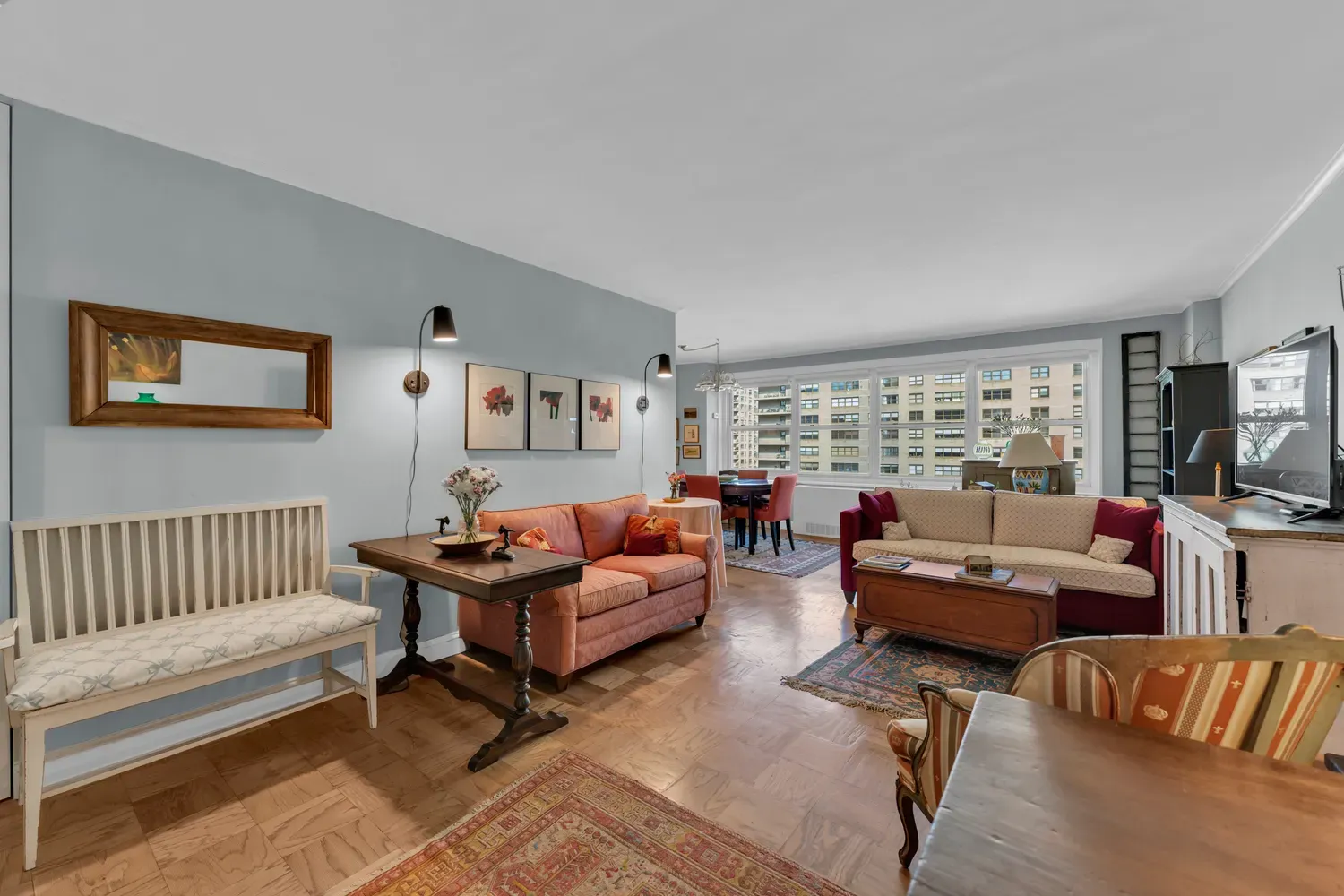
The UWS is historically co-op heavy, with many large prewar buildings and classic layouts.
Co-ops (often the “value play”)
Typical advantages:
- Often more space for the money
- Strong prewar charm and layout efficiency in many buildings
Typical tradeoffs:
- Board approval and more documentation
- Building-specific financing and sublet rules
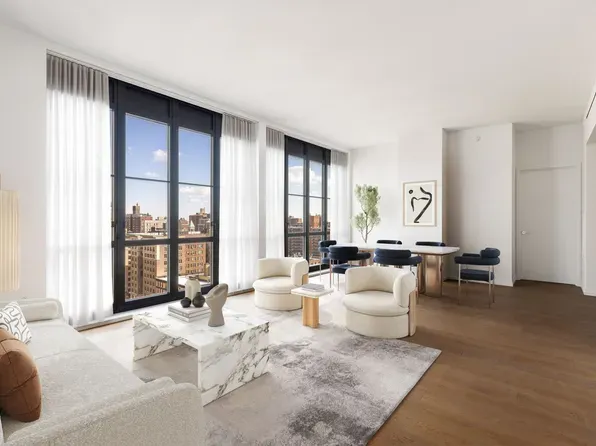
Condos (often the “flexibility play”)
Typical advantages:
- Generally simpler purchase process
- More flexibility for future use (varies by building)
Typical tradeoffs:
- Higher $/ft², especially for newer/full-service product
Upper West Side $/ft² snapshot: 1-, 2-, and 3-bedroom co-ops vs. condos
The table below is a current asking-price $/ft² snapshot based on active UWS listings with disclosed square footage. Use this as a pricing compass—not as an appraisal—because (1) co-op square footage is not always published and can be approximate, and (2) asking prices can differ from final sale prices after negotiation. Data was pulled from active UWS condo and co-op listing results where sqft was displayed.
| Segment | Median asking $/ft² | Middle 50% band | Observed range |
|---|---|---|---|
| Co-op 1BR | $949 | $891–$1,021 | $682–$1,184 |
| Condo 1BR | $1,325 | $1,172–$1,438 | $1,057–$2,006 |
| Co-op 2BR | $1,218 | $1,020–$1,295 | $729–$1,418 |
| Condo 2BR | $1,359 | $1,161–$1,684 | $819–$2,334 |
| Co-op 3BR | $1,446 | $1,223–$1,940 | $570–$4,196 |
| Condo 3BR | $1,970 | $1,684–$2,314 | $1,051–$3,486 |
How to interpret this (so you don’t get misled by the numbers)
- Middle 50% band = the most typical pricing zone, excluding unusually low/high outliers.
- Ranges can look extreme because special cases show up in listing data (trophy homes, unique conditions, or restricted programs).
- Micro-location matters: Lincoln Square, Central Park adjacency, and prime “70s/80s blocks” often behave differently from far-north or far-west pockets.
What this means for buyers right now
- If your priority is maximum space/value, the co-op market often delivers stronger $/ft² efficiency (with the tradeoff of board process).
- If your priority is flexibility and ease of purchase, condos typically win—especially for buyers who value simpler approval and future optionality.
Next step: make this specific to your purchase plan
If you share your target budget, preferred bed/bath count, and whether you lean co-op or condo, I can translate these $/ft² benchmarks into a tight short list of UWS sub-areas and building types—and a clear pricing strategy for making offers without overpaying.

Member discussion