Park Slope Brownstone vs Bay Ridge Limestone: Why Priced-Out Buyers Are Falling for the Limestones
Park Slope brownstones now run $1,050–$1,150 a square foot. A few subway stops south, Bay Ridge limestones offer the same prewar detail for roughly half that. Here's why priced-out buyers are settling into the neighborhood I grew up in — and not looking back.

I was born in Park Slope. I was raised in Bay Ridge, from the time I was ten years old. I've sold homes in Park Slope, and my office sits right at 125 7th Avenue, in the heart of the neighborhood — I walk those brownstone blocks every day. So when people ask me whether they should stretch for a Park Slope brownstone or look at a Bay Ridge limestone instead, I'm not answering as an outsider comparing two spots on a map. I know both markets from the inside, and I've lived on both sides of this decision, literally, before it was even mine to make.
Lately, I'm having that conversation more than ever. And the numbers explain why.
The Park Slope math
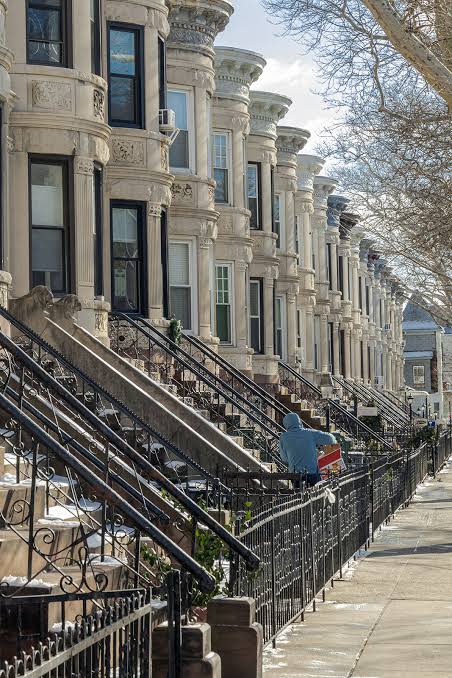
Park Slope earns its reputation. Prospect Park at your doorstep, a landmarked historic district, some of the most photographed brownstone blocks in the city — it's the neighborhood other Brooklyn neighborhoods get compared to. That reputation carries a price tag.
As of early 2026, median home sale prices in Park Slope sit around $1.45 million, with price per square foot running roughly $1,050 to $1,150 depending on condition and block. Actual brownstones — the single-family townhouses buyers picture when they picture Park Slope — mostly trade between $2.5 million and $5 million, and landmark-quality homes on the prime blocks near the park regularly clear $4 million. A fixer-upper, the kind that needs a full renovation before you can move in, still starts around $2 million.
That's before you factor in the work. Buyers competing for these homes aren't just paying for square footage — they're paying for original woodwork, for a landmarked facade, for the privilege of being three blocks from a park bench with a $2 million view. I wrote a informative blog on the different size Park Slope Brownstones click here to read.
The Bay Ridge math
Now walk into a Bay Ridge limestone. Same prewar bones — carved detail, high ceilings, the kind of masonry rowhouse construction that doesn't get built anymore. In 2026, those limestones typically trade in the low-to-mid $1 millions. Brick semi-detached two-families run $1.1 million to $1.6 million, often with a rental unit that helps carry the mortgage. Price per square foot in Bay Ridge runs about $635 to $680 — roughly half of what the same square footage costs in Park Slope.
Put those two numbers side by side and the gap does the talking: a buyer priced out of a Park Slope fixer-upper can land a move-in-ready Bay Ridge limestone for less, with room to spare.
Why the limestones, specifically
Bay Ridge has always had strong housing stock — the neighborhood was built out with families in mind, and that shows in the detached and semi-detached homes lining streets like Narrows Avenue and Shore Road. But it's the limestone rowhouses that are pulling the Park Slope crowd specifically, because they're the closest architectural cousin to what those buyers already have their eye on. Same era. Same detail. Same "I found a real house, not just a unit" feeling. Just a different price per square foot and a longer commute.
That commute is worth naming honestly: the R train puts you in Manhattan in about 45 to 55 minutes from Bay Ridge, longer than the ride from Park Slope. For some buyers, that's the deal-breaker. For a growing number of others, it's a trade they're making without much hesitation — because the alternative is staying in a rental, or stretching into a bidding war they can't comfortably win.
Who's making the move
The buyers I'm seeing settle into Bay Ridge right now generally fall into a few groups: families who got outbid once or twice in Park Slope and decided to stop fighting for less house at a higher price; first-time buyers who can stretch for a two-family with rental income here in a way they couldn't in Park Slope; and Manhattan transplants who did the math on space per dollar and landed south.
What they have in common is that none of them are settling in the way that word usually implies. They're not compromising on the house — the limestone rowhouse, the ceiling height, the original moldings are all still there. What they're getting out of is the price per square foot.
The rental market is telling the same story
I saw this play out firsthand with a rental listing at 331 76th Street in Bay Ridge. It's a full two-floor house — and when I opened it up for showings, a good number of the families who came through weren't from Bay Ridge at all. They were coming from Carroll Gardens and Cobble Hill, where a comparable full brownstone rental now starts at $12,000 a month and up.
That's the sale-side story repeating itself in rentals: the house they want exists two neighborhoods over, at a monthly number that doesn't require a second income just to make rent. Take a look at the listing and compare it to what $12K gets you in Cobble Hill — the gap speaks for itself.
The honest trade-off
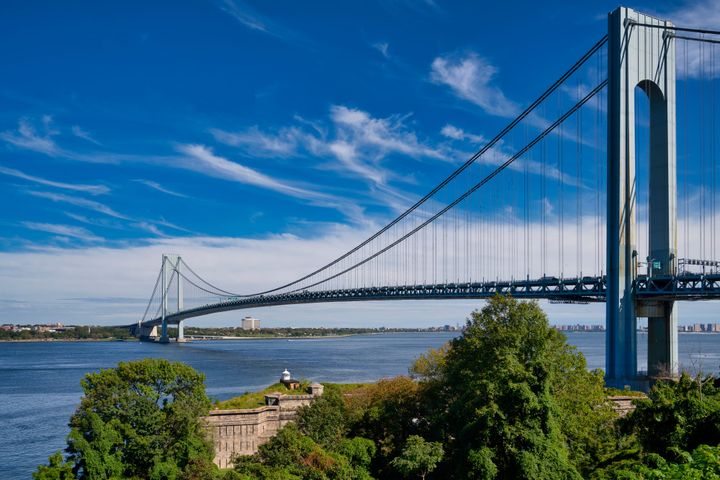
I'll say the quiet part out loud, because I grew up on both sides of this comparison: Park Slope has Prospect Park, and nothing in Bay Ridge fully replaces that. What Bay Ridge has instead is Shore Road, the waterfront, a slower pace, and a "small town within the city" feel that a lot of buyers didn't know they wanted until they found it. It also has a longer commute and, for now, less name recognition outside Brooklyn — which is exactly why the value is still there.
Neighborhoods don't stay undervalued forever. Bay Ridge home prices were up double digits year over year through 2026, and the buyers who are moving now are the ones benefiting from that gap while it still exists. If you're comparing a Park Slope search that keeps losing to a Bay Ridge search you haven't started yet, that's a conversation worth having before the gap closes further.
If you'd like to talk through what your budget actually buys in each neighborhood, I'm happy to walk you through it block by block — I know both sides of this comparison better than most.

Comments ()