PARK SLOPE TOWNHOUSE GUIDE 2026 Width, Location & Value — Everything You Need to Know By Laurie Savino
No two Park Slope townhouses are priced the same. Width, zone, and proximity to Prospect Park drive value more than any other factor — here's exactly what each means in dollars.
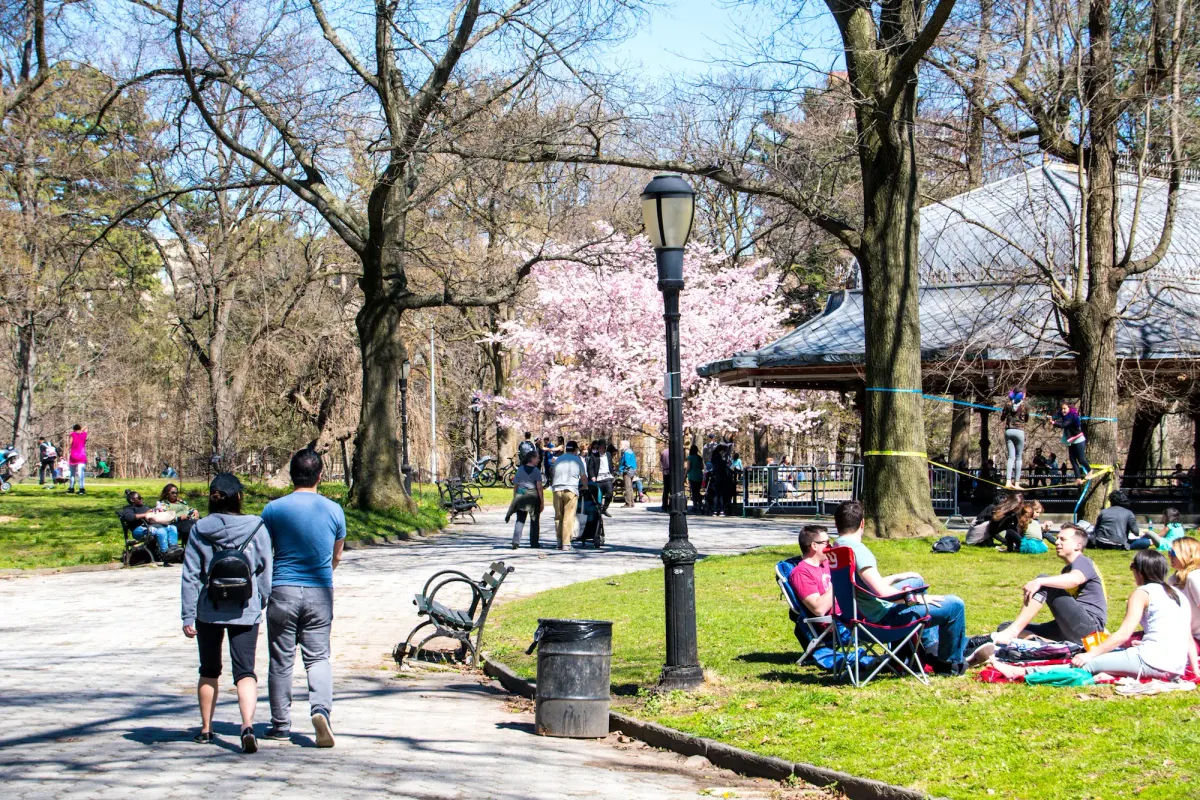
The Townhouse That Park Slope Built
There is no neighborhood in Brooklyn quite like Park Slope — and there is no product in Park Slope quite like the townhouse. From the creamy limestone facades of Prospect Park West to the raw brick row houses near 4th Avenue, these properties tell the story of the neighborhood, block by block, width by width, dollar by dollar.
If you're a buyer, seller, or simply someone who has ever walked down a Park Slope side street and wondered exactly what that 20-foot-wide brownstone is worth compared to the 25-footer two doors down — this guide is for you.
We're breaking down Park Slope's distinct sub-neighborhoods, what each means for pricing, and how the three most common townhouse lot widths — 15, 20, and 25 feet — translate to real dollars in today's market.
MARKET SNAPSHOT — MARCH 2026
|
Metric |
Figure |
Year-Over-Year |
|
Median Sale Price (All Homes) |
$2.1M |
+31.3% |
|
Median Price per Sq Ft |
$1,610 |
+25.2% |
|
Median House Sale Price |
$4.6M |
Stable |
|
Avg Days on Market |
45 days |
vs. 34 last year |
|
Q1 2025 Townhouse Volume |
+88% transactions |
+17.4% avg price |
Sources: Redfin, PropertyShark, Leslie Garfield Q1 2025 Brooklyn Townhouse Report
Understanding Park Slope's Four Zones
Park Slope is officially bounded by Flatbush Avenue to the north, Prospect Park West to the east, the Prospect Expressway to the south, and 4th Avenue to the west. But within that box, buyers, brokers, and appraisers recognize distinct sub-markets — and the differences in value are dramatic.
Zone 1 — The North Slope (Grand Army Plaza to 9th Street)
This is the crown jewel. Streets like Berkeley Place, Lincoln Place, and Carroll Street between 8th Avenue and Prospect Park West contain some of the most architecturally significant brownstones and limestones in all of New York City. The landmarked Park Slope Historic District covers much of this area, protecting the streetscapes that make it so coveted.
The North Slope commands the highest prices in the neighborhood — full stop. A renovated, single-family townhouse here can easily reach $6M to $14M depending on width, condition, and proximity to the park. The $13.9M sale of 535 1st Street in September 2025 — less than a block from Prospect Park — set a neighborhood record and underscores just how competitive this corridor has become.
• Architecture: Brownstone, limestone, brick Italianate, Neo-Grec, Queen Anne
• Landmark status: Park Slope Historic District covers most blocks
• Best streets: Montgomery Place, Garfield Place, Carroll St, 1st–3rd Streets (park side)
• Buyer profile: Families, architects, design-conscious buyers, long-term investors
Zone 2 — The Core Slope (9th Street to 15th Street, 5th Ave to 8th Ave)
This is where Park Slope's famous mix of young families, longtime residents, and working professionals live. The housing stock transitions from the grandest blocks near the park to slightly more modest but still beautiful brownstones closer to 5th and 6th Avenues. 7th Avenue is the neighborhood's main artery — restaurants, coffee shops, schools, and the rhythm of daily life.
Prices here are meaningfully lower than the North Slope near the park, but still among the highest in Brooklyn. A 20-foot-wide, two-family brownstone in good condition typically asks $3M to $5M. The Core Slope is where you find the most balanced trade-off between price and Park Slope prestige.
• Architecture: Classic brownstone row houses, some brick, occasional limestone
• Best streets: 6th, 7th, 8th Avenues; 9th–14th Streets
• Schools: PS 321, MS 51 — among NYC's most sought-after public schools
• Buyer profile: Families upgrading from apartments, investors, local trade-up buyers
Zone 3 — South Slope (15th Street to Prospect Expressway, 5th Ave to 8th Ave)
South Slope has been the neighborhood's most active appreciation story of the past decade. Once considered the 'budget' entry point into Park Slope, it now commands prices that would have been unthinkable ten years ago. The blocks near Prospect Park — particularly along Prospect Park Southwest and 16th to 20th Streets — feel like quiet, tree-lined escapes.
South Slope townhouses typically run 15% to 25% below comparable North Slope properties, making them the value play within the neighborhood. Two-family homes in the $2M to $3.5M range remain available here. The neighborhood is bordered to the south by Windsor Terrace, which provides an even more suburban feel at lower price points.
• Architecture: Row houses, some mixed brick/brownstone, more modest scale
• Best streets: 15th–20th Streets near Prospect Park West/Southwest
• Value proposition: Lower entry point, same PS 321 zone, Prospect Park access
• Buyer profile: First-time townhouse buyers, buyers coming from Windsor Terrace
Zone 4 — The 4th Avenue Corridor (New Development)
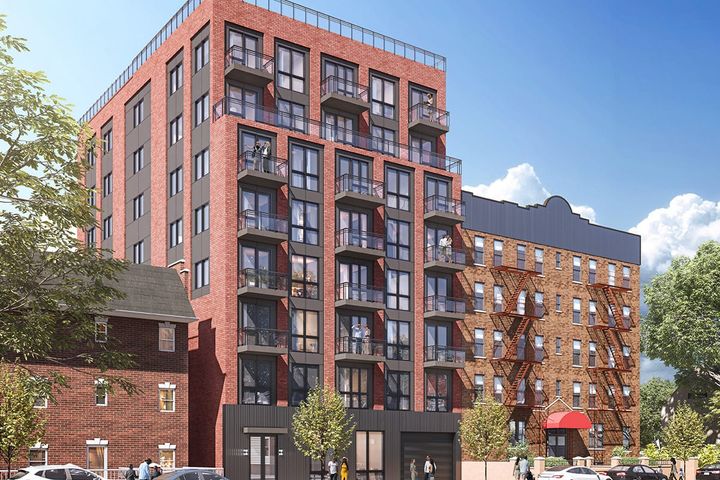
4th Avenue is Park Slope's western frontier — and its most dramatic transformation zone. The rezoning of this commercial/industrial corridor has unleashed a wave of new luxury residential development. These are not brownstones. They are modern concrete-and-glass condominium towers with doormen, rooftop decks, gyms, and concierge services.
For townhouse buyers, 4th Avenue represents a different calculation: new construction at lower per-square-foot prices than historic brownstones, but without the character, the garden, the parlor floor, or the historic bones that define Park Slope living. New development condos along 4th Avenue are pricing between $1,000 and $1,400 per square foot, making them significantly more accessible than the $1,500 to $2,300+ range seen in historic townhouse conversions.
• Projects: 380 4th Avenue (Longview, 197 units), 350 Butler Street, 67 4th Avenue (14-story, filed 2025)
• Price range: $800K to $3M for new condos
• PSF new development: $1,000–$1,400/sq ft
• Buyer profile: First-time buyers, commuters, buyers priced out of historic blocks
Width Matters: The 15, 20, and 25-Foot Townhouse
In Park Slope — as in all of Brownstone Brooklyn — the width of a townhouse is one of the single most important value drivers. Width determines square footage per floor, the depth of rooms, the ability to have two bedrooms across a floor rather than one, and the overall livability of the home. Here is what each standard width actually means in today's market.
The 15-Foot Townhouse — The Classic Row House
The 15-foot-wide townhouse is the most common configuration in Park Slope, particularly as you move away from the park and toward 5th and 6th Avenues, and into South Slope. Built primarily as working-class and middle-class housing in the late 19th and early 20th centuries, these homes typically run four stories with a garden level, parlor floor, two upper floors, and a cellar.
A 15-foot wide home on a standard 100-foot lot yields roughly 1,500 square feet per building footprint. Total gross square footage across four usable floors is typically 2,400 to 3,000 square feet. Don't underestimate these homes — they are often configured as two-family properties that generate meaningful rental income, and the parlor floors retain incredible original detail.
|
15-Foot Wide Townhouse |
Closer to Prospect Park |
Mid-Slope (5th–6th Ave) |
Closer to 4th Avenue |
|
Unrenovated / As-Is |
$1.8M – $2.5M |
$1.4M – $1.9M |
$1.1M – $1.5M |
|
Partially Renovated |
$2.2M – $3.0M |
$1.8M – $2.4M |
$1.4M – $1.9M |
|
Gut Renovated / Turnkey |
$2.8M – $4.0M |
$2.2M – $3.2M |
$1.7M – $2.4M |
|
Approx. Price Per Sq Ft |
$900 – $1,400 |
$750 – $1,100 |
$600 – $850 |
Key insight: A 15-foot-wide townhouse in a gut-renovated, turnkey condition one block from Prospect Park can command prices that match or exceed an unrenovated 20-footer several blocks away. Condition and location are everything.
The 20-Foot Townhouse — The Sweet Spot
The 20-foot-wide townhouse is what most people picture when they imagine Park Slope living. Wide enough to have proper double-wide parlor floors, two real bedrooms side by side on upper floors, and a sense of genuine urban grandeur — this is the most liquid and most actively traded product in the neighborhood. Families love them. Investors love the two-family configurations. Architects love the bones.
On a standard 100-foot lot, a 20-foot-wide home yields approximately 2,000 square feet per floor, with total gross square footage typically ranging from 3,200 to 4,500 square feet across four stories. These are serious family homes.
|
20-Foot Wide Townhouse |
Closer to Prospect Park |
Mid-Slope (5th–6th Ave) |
Closer to 4th Avenue |
|
Unrenovated / As-Is |
$2.5M – $3.5M |
$2.0M – $2.8M |
$1.6M – $2.2M |
|
Partially Renovated |
$3.2M – $4.5M |
$2.5M – $3.6M |
$2.0M – $2.8M |
|
Gut Renovated / Turnkey |
$4.5M – $7.0M |
$3.5M – $5.5M |
$2.5M – $3.8M |
|
Approx. Price Per Sq Ft |
$1,000 – $1,600 |
$850 – $1,300 |
$700 – $1,000 |
Market highlight: The $13.9M sale at 535 1st Street (September 2025) — a renovated townhouse less than a block from Prospect Park — reset expectations for the premium commanded at the park's edge. In Q1 2025, Park Slope townhouse transaction volume jumped 88%, with average sale prices rising 17.4% year-over-year.
The 25-Foot Townhouse — The Grand Dame
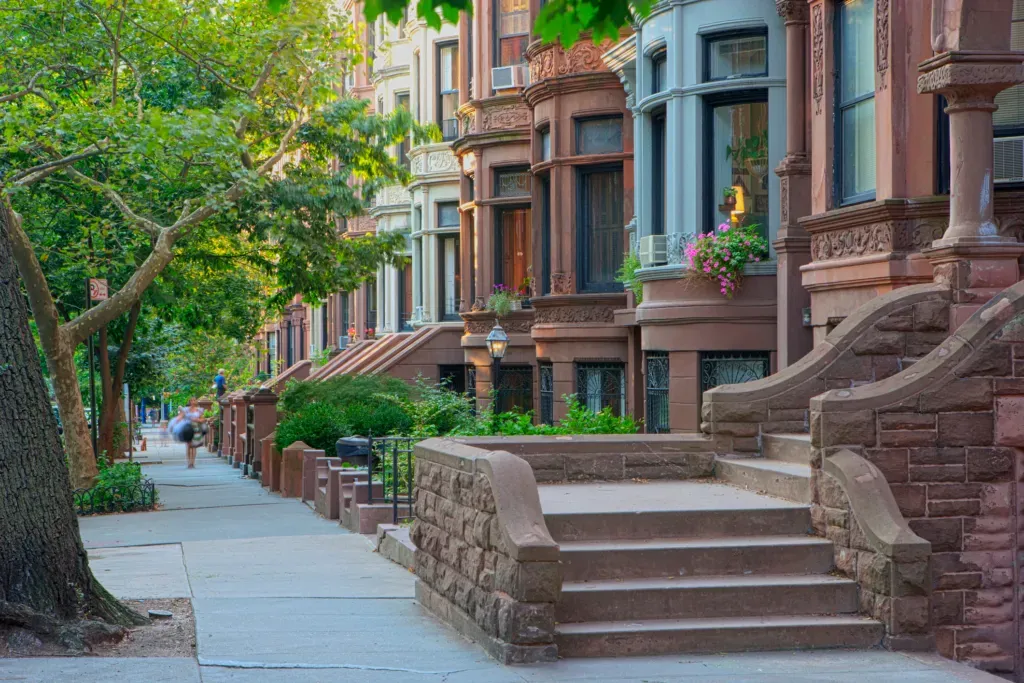
The 25-foot-wide townhouse is the rarest, most coveted, and most expensive product in Park Slope. These are the houses you stop in front of on Montgomery Place or Prospect Park West and take a photo of. They often sit on corner lots or on the most prominent blocks of the Historic District. They were built for the wealthy Victorian families who chose Park Slope when it had the highest per-capita income in the nation.
A 25-foot-wide home on a 100-foot lot gives you roughly 2,500 square feet per floor — enough for three proper bedrooms across a single level, a formal dining room with a separate sitting room, and stairwells that don't feel like you're squeezing past each other. These are proper mansions, by any measure.
|
25-Foot Wide Townhouse |
Closer to Prospect Park |
Mid-Slope (5th–6th Ave) |
Closer to 4th Avenue |
|
Unrenovated / As-Is |
$4.0M – $6.0M |
$3.0M – $4.5M |
Rare / N/A |
|
Partially Renovated |
$5.5M – $8.5M |
$4.0M – $6.5M |
Rare / N/A |
|
Gut Renovated / Turnkey |
$8.0M – $14M+ |
$6.0M – $10M |
Rare / N/A |
|
Approx. Price Per Sq Ft |
$1,200 – $2,000+ |
$950 – $1,500 |
N/A |
The 25-foot-wide townhouse rarely appears on 4th Avenue — the land parcels there were not platted for this type of housing, and the new development there skews toward vertical construction rather than historic row houses.
The Location Premium: Prospect Park vs. 4th Avenue
In Park Slope, the east-west gradient is one of the most consistent pricing forces in Brooklyn real estate. Every block you move toward Prospect Park, value increases. Every block you move toward 4th Avenue, value decreases — but affordability (and in the case of new development, amenity value) increases.
Here is a rough estimate of the location premium for comparable townhouses at various points across the neighborhood's east-west span:
|
Distance from Prospect Park |
Approx. Premium over 4th Ave |
Best For |
|
1 Block from Prospect Park West |
+60% to +80% |
Maximum prestige, trophy buyers |
|
2–3 Blocks (7th–8th Avenues) |
+35% to +55% |
Park access + value balance |
|
Mid-Slope (5th–6th Avenues) |
+15% to +30% |
Best volume, most liquid market |
|
Near 4th Avenue (3rd–4th Ave) |
Baseline |
Value entry, income properties |
|
4th Avenue (New Development) |
N/A — different product |
Modern amenities, first-timers |
Note: These are directional estimates based on observed market data and professional experience in the neighborhood. Individual properties vary significantly based on condition, configuration, and block-specific characteristics.
What the Park Premium Actually Buys You
The Prospect Park premium is not just about prestige. There are real, tangible reasons these blocks command more money:
• Landmark protection: Most blocks within two to three blocks of the park fall within the Park Slope Historic District, which limits demolition and ensures neighbors can't dramatically alter their homes. Landmark status is a price stabilizer.
• Street quality: Wider sidewalks, more mature street trees, and lower foot traffic make these blocks genuinely quieter and more livable.
• Prospect Park access: Year-round — the farmer's market at Grand Army Plaza, the ice skating rink, the tennis courts, the dog beach, the concerts. Living one block from the park is different from living six blocks away.
• School assignment: Many of the park-adjacent blocks fall into the PS 321 zone, consistently ranked among the top elementary schools in New York City.
• Architectural integrity: The grandest, widest, best-preserved homes concentrate closest to the park. If you want the full Park Slope fantasy — the carved oak staircase, the stained glass transoms, the original plaster medallions — you are more likely to find it here.
New Development: The 4th Avenue Story
While historic townhouses define Park Slope's identity, new construction has dramatically reshaped the neighborhood's western edge — and created an entirely new price tier for buyers who want Park Slope's ZIP code without the brownstone premium.
The 4th Avenue rezoning, which allowed taller residential construction along the commercial corridor, has produced a new generation of luxury condo buildings. These are not townhouses — but they are worth understanding for anyone comparing options in the neighborhood.
New Development Price Per Square Foot — Park Slope 2026
|
Product Type |
PSF Range |
Typical Total Price |
Location |
|
New Condo (4th Ave corridor) |
$1,000 – $1,400/sq ft |
$800K – $2.5M |
4th Ave, 2nd–3rd Ave |
|
Boutique Condo (converted TH) |
$1,600 – $2,333/sq ft |
$1.2M – $3.5M |
Historic blocks |
|
Pre-war Co-op (renovated) |
$900 – $1,200/sq ft |
$500K – $1.5M |
Neighborhood-wide |
|
Historic TH (mid renovation) |
$1,100 – $1,500/sq ft |
$2M – $5M |
Core + South Slope |
|
Historic TH (fully renovated) |
$1,400 – $2,000+/sq ft |
$4M – $14M+ |
North Slope / Park edge |
Notable transactions: In January 2025, Unit 8D at 145 Park Place traded at $2,225 per square foot — a resale condo record for the neighborhood. In 2024, 851 Carroll Street set the sponsor price-per-square-foot record at $2,333 per square foot for a converted townhouse condo of 908 square feet.
Active New Development to Watch
• The Slope on Fifth (445 5th Avenue): 30 condo units averaging 991 sq ft, six stories, mixed-use. Nearly complete as of August 2025.
• 380 4th Avenue (Longview): 197-unit rental tower with affordable lottery component. 17 stories on Park Slope/Gowanus border.
• 67 4th Avenue: Permits filed for a 14-story mixed-use building near Atlantic Avenue–Barclays Center subway hub.
• 350 Butler Street: The Brooklyn Home Company's 34-unit project has nearly sold out, reflecting strong demand for 4th Avenue new development.
Your Park Slope Townhouse Cheat Sheet
Before we send you out to walk the blocks, here is a quick-reference summary of everything covered above:
If your budget is $1.5M to $2.5M:
Look at 15-foot-wide townhouses in South Slope or near 4th Avenue, unrenovated two-families that need work, or new condo product along the 4th Avenue corridor. You are unlikely to find a turnkey historic townhouse in this range — but you may find a value-add opportunity with excellent bones.
If your budget is $2.5M to $4.5M:
This is the most active zone of the Park Slope townhouse market. You can find 15-foot-wide turnkey homes in the Core or South Slope, 20-foot-wide partially renovated homes on mid-slope blocks, or new boutique condo product in the $2M to $3M range. This is where buyers have the most options and negotiating room.
If your budget is $4.5M to $8M:
You are shopping for renovated or well-maintained 20-foot-wide homes on the best blocks of the Core Slope, or slightly smaller homes on the North Slope near the park. Architecture matters enormously in this range — a fully landmarked, gut-renovated 20-footer with original detail on 1st Street is worth materially more than a similar-width home in mid-slope condition.
If your budget is $8M and above:
Welcome to the North Slope. You are now shopping for 25-foot-wide homes within two blocks of Prospect Park, trophy properties on Montgomery Place or Garfield Place, or the increasingly rare opportunity to buy a structurally sound but unrenovated grand dame and make it your own. This is the most competitive and least liquid part of the market — when these homes come to market, they move fast.
The Bottom Line on Park Slope Townhouses
Park Slope townhouses are not just real estate — they are one of the last remaining ways to own a piece of a genuinely great American neighborhood. The market for them in 2026 is as competitive as it has ever been. Transaction volume in Q1 2025 surged 88%, median prices rose 17%, and the neighborhood set a new all-time sales record with a $13.9M trade in September 2025.
Whether you are looking at a 15-foot-wide row house near 4th Avenue or a 25-foot-wide limestone palace overlooking Prospect Park, the same fundamental principle applies: width, condition, and proximity to the park drive value — in that order.
If you are thinking about buying or selling a Park Slope townhouse, I'd love to talk. I am Laurie Savino, Licensed Associate Real Estate Broker with The Corcoran Group, and I have spent my career in Brownstone Brooklyn helping clients navigate exactly these decisions.
Laurie Savino | The Savino Team | The Corcoran Group
destination.living | savinoteam.com | Brooklyn + Monmouth County
Certified Negotiation Expert | Corcoran Luxury Agent | EWTS Certified Guide
Market Disclosure
All price ranges and market data referenced in this post are based on publicly available transaction records, industry reports (Redfin, PropertyShark,, and professional market knowledge current as of Q1 2026. Individual property values vary significantly based on condition, configuration, legal status, and specific block characteristics. This content is for informational purposes only and does not constitute a formal appraisal or valuation. Please contact Laurie Savino laurie.savino@corcoran.com for a Comparative Market Analysis specific to your property.

Comments ()